

Vertical gardens
Vertical gardens, also known as living walls or green walls, are structures where plants grow on vertically suspended panels, supported by soil, hydroponic, or aeroponic systems. They are designed to maximize greenery in limited spaces, making them especially valuable in urban areas where horizontal land is scarce. By covering building facades or indoor walls with vegetation, vertical gardens improve air quality by filtering dust and pollutants, while also reducing noise levels. They act as natural insulation, lowering heating and cooling demands, which helps reduce energy consumption and greenhouse gas emissions. In cities, they also contribute to mitigating the urban heat island effect, cooling surrounding areas through shading and evapotranspiration.
Beyond environmental benefits, vertical gardens bring significant aesthetic and social value. They enhance architectural design, create calming spaces, and promote mental well-being by increasing contact with nature in otherwise concrete-dominated environments. Indoors, they regulate humidity, enrich oxygen levels, and support healthier living and working spaces. Advances in modular panels and irrigation systems have made them easier to install and maintain, with species chosen for their adaptability and resilience. Large-scale vertical gardens on building exteriors also contribute to biodiversity by providing habitats for insects and birds. As part of sustainable urban planning, these green walls integrate ecological functions with modern design, offering a practical and visually striking solution for greener, healthier cities.
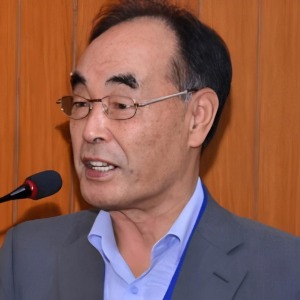
Dai Yeun Jeong
Asia Climate Change Education Center and Jeju National University, Korea, Republic of
Carme Ferre Pavia
Universitat Autonoma de Barcelona, Spain
Heather M Coleman
Ulster University, Ireland
Angela Vande
Vamde consulting, Canada
Bence Hernadi
University of Pannonia, Hungary
Tamaz Patarkalashvili
Technical University, Georgia


Title : Beyond 3R: The 4P proposal for strategic narratives on climate change
Carme Ferre Pavia, Universitat Autonoma de Barcelona, Spain
Title : Climate change and natural disasters: Predicting financial losses, managing volatility, and building financial resilience
Giuseppe Orlando, University of Bari, Italy
Title : Introducing the optimal carbon market: A comparative analysis of current conditions across four regions
Mohammad Imran Azizi, UNEP-Tongji Institute of Environment for Sustainable Development, China
Title : Turning waste into water treatment media: Waste-derived aggregates in nature-based solutions for treating diverse water matrices
Antonio Albuquerque, University of Beira Interior, Portugal
Title : Personalized, community- and population-related health in a changing and sustainable environment through the view of Personalized & Precision Healthcare (PPH): Its impact and role in preventing disease to maximize global health
Sergey Suchkov, N.D. Zelinskii Institute for Organic Chemistry of the Russian Academy of Sciences, Russian Federation
Title : Who bears the cost of a clean transition? Battery circularity and gender justice in India’s electric mobility shift
Sanoj, Jawaharlal Nehru University, Delhi, India