

Urban climate resilience
As cities around the world continue to grow, building urban climate resilience has become essential to protect millions of people from the increasing impacts of climate change. Urban areas face unique challenges such as heatwaves, flooding, and infrastructure stress due to their dense populations and high energy demands. Developing urban climate resilience means designing cities that can absorb, recover from, and adapt to climate shocks while maintaining essential services. This involves green infrastructure like parks and green roofs to reduce heat islands, improved drainage systems to manage stormwater, and building codes that prioritize energy efficiency and disaster preparedness.
Strengthening urban climate resilience also requires inclusive planning that considers vulnerable communities who are often most affected by climate impacts. Investing in early warning systems, resilient transportation, and sustainable housing helps cities withstand future climate uncertainties. As more than half of the global population lives in urban areas, these efforts are crucial for global sustainability. By integrating nature-based solutions and community engagement into urban planning, cities can become healthier, safer, and more adaptive. Ultimately, advancing urban climate resilience protects not only infrastructure but also the well-being and livelihoods of urban residents. Creating resilient cities today lays the foundation for a sustainable and thriving environment world tomorrow.
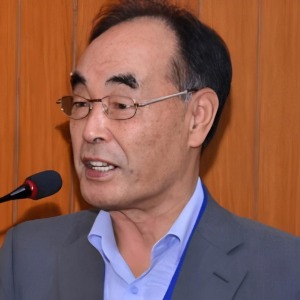
Dai Yeun Jeong
Asia Climate Change Education Center and Jeju National University, Korea, Republic of
Carme Ferre Pavia
Universitat Autonoma de Barcelona, Spain
Heather M Coleman
Ulster University, Ireland
Angela Vande
Vamde consulting, Canada
Bence Hernadi
University of Pannonia, Hungary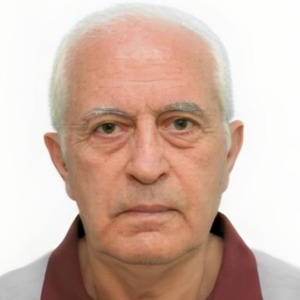
Tamaz Patarkalashvili
Technical University, Georgia


Title : Beyond 3R: The 4P proposal for strategic narratives on climate change
Carme Ferre Pavia, Universitat Autonoma de Barcelona, Spain
Title : Climate change and natural disasters: Predicting financial losses, managing volatility, and building financial resilience
Giuseppe Orlando, University of Bari, Italy
Title : Introducing the optimal carbon market: A comparative analysis of current conditions across four regions
Mohammad Imran Azizi, UNEP-Tongji Institute of Environment for Sustainable Development, China
Title : Turning waste into water treatment media: Waste-derived aggregates in nature-based solutions for treating diverse water matrices
Antonio Albuquerque, University of Beira Interior, Portugal
Title : Personalized, community- and population-related health in a changing and sustainable environment through the view of Personalized & Precision Healthcare (PPH): Its impact and role in preventing disease to maximize global health
Sergey Suchkov, N.D. Zelinskii Institute for Organic Chemistry of the Russian Academy of Sciences, Russian Federation
Title : Who bears the cost of a clean transition? Battery circularity and gender justice in India’s electric mobility shift
Sanoj, Jawaharlal Nehru University, Delhi, India