

Seed banking
Seed banking is a vital conservation strategy aimed at preserving plant genetic diversity for future restoration, research, and food security. By collecting, storing, and maintaining seeds under controlled conditions, seed banks safeguard species from habitat loss, climate change, overexploitation, and other environmental threats. This approach is particularly crucial for endangered, rare, or economically important plants, ensuring that genetic resources remain available for reintroduction, breeding programs, and adaptation to changing environmental conditions. Seed banking not only supports biodiversity conservation but also underpins sustainable agriculture and ecosystem resilience by providing a repository of plant varieties with adaptive traits for future generations.
Technological innovations enhance the effectiveness of seed banking through improved drying, freezing, and storage protocols that maintain seed viability over long periods. Genetic analysis, cryopreservation, and germination testing enable efficient management, characterization, and utilization of seed collections. Policy frameworks, international collaborations, and stakeholder engagement facilitate the sharing of genetic resources, standardize conservation practices, and promote the integration of seed banking into broader biodiversity and agricultural strategies. By combining scientific expertise, advanced technology, and governance mechanisms, seed banking preserves plant diversity, safeguards essential ecosystem functions, supports climate adaptation, and ensures the continued availability of vital genetic resources for sustainable development and ecological restoration.
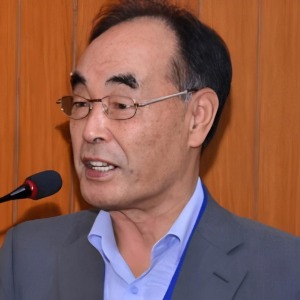
Dai Yeun Jeong
Asia Climate Change Education Center and Jeju National University, Korea, Republic of
Carme Ferre Pavia
Universitat Autonoma de Barcelona, Spain
Heather M Coleman
Ulster University, Ireland
Angela Vande
Vamde consulting, Canada
Bence Hernadi
University of Pannonia, Hungary
Tamaz Patarkalashvili
Technical University, Georgia


Title : Beyond 3R: The 4P proposal for strategic narratives on climate change
Carme Ferre Pavia, Universitat Autonoma de Barcelona, Spain
Title : Climate change and natural disasters: Predicting financial losses, managing volatility, and building financial resilience
Giuseppe Orlando, University of Bari, Italy
Title : Introducing the optimal carbon market: A comparative analysis of current conditions across four regions
Mohammad Imran Azizi, UNEP-Tongji Institute of Environment for Sustainable Development, China
Title : Turning waste into water treatment media: Waste-derived aggregates in nature-based solutions for treating diverse water matrices
Antonio Albuquerque, University of Beira Interior, Portugal
Title : Personalized, community- and population-related health in a changing and sustainable environment through the view of Personalized & Precision Healthcare (PPH): Its impact and role in preventing disease to maximize global health
Sergey Suchkov, N.D. Zelinskii Institute for Organic Chemistry of the Russian Academy of Sciences, Russian Federation
Title : Who bears the cost of a clean transition? Battery circularity and gender justice in India’s electric mobility shift
Sanoj, Jawaharlal Nehru University, Delhi, India