

Polar ice melting
Polar ice melting is one of the most visible and alarming signs of global climate change, with profound implications for the planet. The Arctic and Antarctic regions are losing ice at accelerating rates due to rising global temperatures. In the Arctic, sea ice is thinning and retreating each year, while in Antarctica, massive ice shelves are breaking apart and glaciers are flowing more rapidly into the ocean. This ongoing ice loss contributes significantly to global sea level rise, threatening coastal communities and ecosystems around the world.
Beyond rising seas, the melting of polar ice disrupts entire ecosystems and climate systems. In the Arctic, wildlife such as polar bears, seals, and walruses are losing critical habitat, while indigenous communities are seeing their traditional ways of life vanish. The loss of reflective ice surfaces also creates a feedback loop—known as the albedo effect—where darker ocean water absorbs more solar heat, further accelerating warming. In Antarctica, the destabilization of ice sheets could trigger long-term changes in ocean currents and weather patterns across the globe. Scientists stress the urgency of reducing greenhouse gas emissions and investing in climate adaptation to slow polar ice melt and mitigate its far-reaching effects. The melting poles are not isolated events—they are a warning signal for the entire planet.
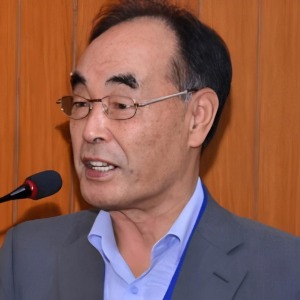
Dai Yeun Jeong
Asia Climate Change Education Center and Jeju National University, Korea, Republic of
Carme Ferre Pavia
Universitat Autonoma de Barcelona, Spain
Heather M Coleman
Ulster University, Ireland
Angela Vande
Vamde consulting, Canada
Bence Hernadi
University of Pannonia, Hungary
Tamaz Patarkalashvili
Technical University, Georgia


Title : Beyond 3R: The 4P proposal for strategic narratives on climate change
Carme Ferre Pavia, Universitat Autonoma de Barcelona, Spain
Title : Climate change and natural disasters: Predicting financial losses, managing volatility, and building financial resilience
Giuseppe Orlando, University of Bari, Italy
Title : Introducing the optimal carbon market: A comparative analysis of current conditions across four regions
Mohammad Imran Azizi, UNEP-Tongji Institute of Environment for Sustainable Development, China
Title : Turning waste into water treatment media: Waste-derived aggregates in nature-based solutions for treating diverse water matrices
Antonio Albuquerque, University of Beira Interior, Portugal
Title : Personalized, community- and population-related health in a changing and sustainable environment through the view of Personalized & Precision Healthcare (PPH): Its impact and role in preventing disease to maximize global health
Sergey Suchkov, N.D. Zelinskii Institute for Organic Chemistry of the Russian Academy of Sciences, Russian Federation
Title : Who bears the cost of a clean transition? Battery circularity and gender justice in India’s electric mobility shift
Sanoj, Jawaharlal Nehru University, Delhi, India