

Mine site rehabilitation
Mine site rehabilitation is the process of restoring land that has been disturbed by mining activities to a stable, productive, and ecologically balanced state. This involves reshaping the landscape, replacing topsoil, replanting native vegetation, and ensuring that water quality is protected or improved. Effective rehabilitation mitigates environmental damage such as soil erosion, habitat loss, and contamination from mining waste. It also helps to reestablish ecosystems that support biodiversity and provides opportunities for land reuse, including agriculture, forestry, or conservation areas. By restoring mined lands, rehabilitation plays a crucial role in reducing the long-term environmental footprint of mining operations.
In the broader environment world, mine site rehabilitation is essential for sustainable mining practices and environmental stewardship. Regulatory frameworks increasingly require mining companies to develop and implement rehabilitation plans before, during, and after mining operations to ensure responsible resource extraction. Successful rehabilitation projects contribute to community well-being by improving landscape aesthetics, supporting local economies, and enhancing ecosystem services. Furthermore, rehabilitation efforts can help sequester carbon and combat climate change by restoring vegetation cover. As mining continues to supply vital resources, investing in effective mine site rehabilitation ensures that environmental health and social values are preserved for future generations.
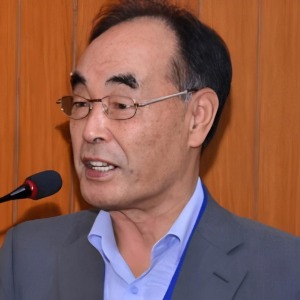
Dai Yeun Jeong
Asia Climate Change Education Center and Jeju National University, Korea, Republic of
Carme Ferre Pavia
Universitat Autonoma de Barcelona, Spain
Heather M Coleman
Ulster University, Ireland
Angela Vande
Vamde consulting, Canada
Bence Hernadi
University of Pannonia, Hungary
Tamaz Patarkalashvili
Technical University, Georgia


Title : Beyond 3R: The 4P proposal for strategic narratives on climate change
Carme Ferre Pavia, Universitat Autonoma de Barcelona, Spain
Title : Climate change and natural disasters: Predicting financial losses, managing volatility, and building financial resilience
Giuseppe Orlando, University of Bari, Italy
Title : Introducing the optimal carbon market: A comparative analysis of current conditions across four regions
Mohammad Imran Azizi, UNEP-Tongji Institute of Environment for Sustainable Development, China
Title : Turning waste into water treatment media: Waste-derived aggregates in nature-based solutions for treating diverse water matrices
Antonio Albuquerque, University of Beira Interior, Portugal
Title : Personalized, community- and population-related health in a changing and sustainable environment through the view of Personalized & Precision Healthcare (PPH): Its impact and role in preventing disease to maximize global health
Sergey Suchkov, N.D. Zelinskii Institute for Organic Chemistry of the Russian Academy of Sciences, Russian Federation
Title : Who bears the cost of a clean transition? Battery circularity and gender justice in India’s electric mobility shift
Sanoj, Jawaharlal Nehru University, Delhi, India