

Groundwater contamination
Groundwater contamination occurs when pollutants seep into underground aquifers, compromising the quality of this vital freshwater resource. Sources of contamination include agricultural runoff laden with pesticides and fertilizers, industrial waste disposal, leaking septic tanks, and improper landfill management. Because groundwater moves slowly through soil and rock layers, contaminants can persist for decades, posing serious risks to drinking water supplies, ecosystems, and human health. Common contaminants such as nitrates, heavy metals, and pathogens can lead to diseases, developmental issues, and ecosystem damage when they enter wells and springs used for consumption.
Addressing groundwater contamination requires a comprehensive approach involving prevention, monitoring, and remediation. Protecting recharge areas, regulating chemical use, and improving waste disposal practices are critical preventative steps. Technologies like bioremediation and pump-and-treat systems can help clean contaminated aquifers, but prevention is far more effective and cost-efficient. Public awareness and community engagement are also vital in reducing pollution risks. As groundwater supplies become increasingly stressed due to over-extraction and climate change, safeguarding their quality is essential for sustainable water security. By protecting groundwater, we ensure clean water access for current and future generations, while preserving the health of connected ecosystems. Strong policies and international cooperation are key to addressing this global challenge effectively.
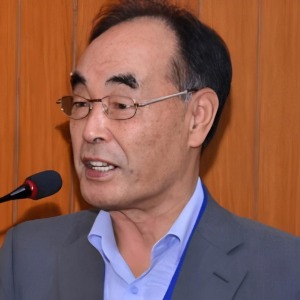
Dai Yeun Jeong
Asia Climate Change Education Center and Jeju National University, Korea, Republic of
Carme Ferre Pavia
Universitat Autonoma de Barcelona, Spain
Heather M Coleman
Ulster University, Ireland
Angela Vande
Vamde consulting, Canada
Bence Hernadi
University of Pannonia, Hungary
Tamaz Patarkalashvili
Technical University, Georgia


Title : Beyond 3R: The 4P proposal for strategic narratives on climate change
Carme Ferre Pavia, Universitat Autonoma de Barcelona, Spain
Title : Climate change and natural disasters: Predicting financial losses, managing volatility, and building financial resilience
Giuseppe Orlando, University of Bari, Italy
Title : Introducing the optimal carbon market: A comparative analysis of current conditions across four regions
Mohammad Imran Azizi, UNEP-Tongji Institute of Environment for Sustainable Development, China
Title : Turning waste into water treatment media: Waste-derived aggregates in nature-based solutions for treating diverse water matrices
Antonio Albuquerque, University of Beira Interior, Portugal
Title : Personalized, community- and population-related health in a changing and sustainable environment through the view of Personalized & Precision Healthcare (PPH): Its impact and role in preventing disease to maximize global health
Sergey Suchkov, N.D. Zelinskii Institute for Organic Chemistry of the Russian Academy of Sciences, Russian Federation
Title : Who bears the cost of a clean transition? Battery circularity and gender justice in India’s electric mobility shift
Sanoj, Jawaharlal Nehru University, Delhi, India