
Environmental Lifecycle Assessment Consultant
Organizations today face growing pressure to understand the full environmental footprint of their products, processes, and services. Through lifecycle assessment, businesses can evaluate resource consumption, emissions, and waste generation across every stage, from raw material extraction to disposal or recycling. An environmental lifecycle assessment consultant brings specialized expertise in mapping these impacts, identifying environmental “hotspots,” and suggesting targeted strategies for improvement. By using advanced modeling tools and internationally recognized methodologies, they help organizations align with sustainability standards and enhance transparency in reporting.
The role extends beyond technical evaluation, requiring strong communication and advisory skills to translate complex findings into actionable solutions. An environmental lifecycle assessment consultant often collaborates with design teams, engineers, and policymakers to support eco-design, green procurement, and sustainable supply chain management. Their recommendations influence product innovation, regulatory compliance, and corporate responsibility initiatives. Ultimately, they play a pivotal role in enabling industries to reduce carbon footprints, improve efficiency, and meet the expectations of environmentally conscious stakeholders. This position combines analytical rigor with practical guidance, ensuring lifecycle thinking becomes a foundation for sustainable decision-making
Dai Yeun Jeong
Asia Climate Change Education Center and Jeju National University, Korea, Republic of
Carme Ferre Pavia
Universitat Autonoma de Barcelona, Spain
Heather M Coleman
Ulster University, Ireland
Angela Vande
Vamde consulting, Canada
Bence Hernadi
University of Pannonia, Hungary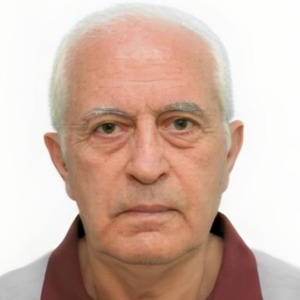
Tamaz Patarkalashvili
Technical University, Georgia


Title : Beyond 3R: The 4P proposal for strategic narratives on climate change
Carme Ferre Pavia, Universitat Autonoma de Barcelona, Spain
Title : Climate change and natural disasters: Predicting financial losses, managing volatility, and building financial resilience
Giuseppe Orlando, University of Bari, Italy
Title : Introducing the optimal carbon market: A comparative analysis of current conditions across four regions
Mohammad Imran Azizi, UNEP-Tongji Institute of Environment for Sustainable Development, China
Title : Turning waste into water treatment media: Waste-derived aggregates in nature-based solutions for treating diverse water matrices
Antonio Albuquerque, University of Beira Interior, Portugal
Title : Personalized, community- and population-related health in a changing and sustainable environment through the view of Personalized & Precision Healthcare (PPH): Its impact and role in preventing disease to maximize global health
Sergey Suchkov, N.D. Zelinskii Institute for Organic Chemistry of the Russian Academy of Sciences, Russian Federation
Title : Who bears the cost of a clean transition? Battery circularity and gender justice in India’s electric mobility shift
Sanoj, Jawaharlal Nehru University, Delhi, India