

Desertification
Desertification is the process by which fertile land becomes increasingly dry and unproductive, eventually turning into desert. This environmental challenge is mainly driven by human actions such as deforestation, overgrazing, and poor water management, combined with the effects of climate change. As vegetation disappears, the soil loses its structure and nutrients, making it difficult for crops or plants to grow. Wind and water erosion further degrade the land, creating a cycle that is hard to reverse. Desertification directly threatens the lives of over a billion people across more than 100 countries, especially in regions like Sub-Saharan Africa, the Middle East, and parts of Asia and South America.
Fighting desertification requires a combination of science, policy, and local community action. Techniques like planting drought-resistant vegetation, practicing crop rotation, using organic fertilizers, and implementing sustainable grazing systems can help restore degraded lands. Governments and global organizations, such as the United Nations Convention to Combat Desertification (UNCCD), work to create international strategies for land restoration and conservation. Local communities also play a key role, as their traditional knowledge and daily practices directly influence land use. By taking proactive steps, we can slow down desertification, improve food security, and protect biodiversity—ensuring a healthier planet for future generations.
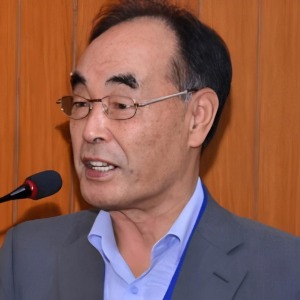
Dai Yeun Jeong
Asia Climate Change Education Center and Jeju National University, Korea, Republic of
Carme Ferre Pavia
Universitat Autonoma de Barcelona, Spain
Heather M Coleman
Ulster University, Ireland
Angela Vande
Vamde consulting, Canada
Bence Hernadi
University of Pannonia, Hungary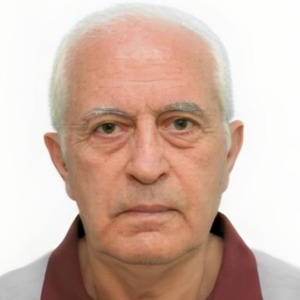
Tamaz Patarkalashvili
Technical University, Georgia


Title : Beyond 3R: The 4P proposal for strategic narratives on climate change
Carme Ferre Pavia, Universitat Autonoma de Barcelona, Spain
Title : Climate change and natural disasters: Predicting financial losses, managing volatility, and building financial resilience
Giuseppe Orlando, University of Bari, Italy
Title : Introducing the optimal carbon market: A comparative analysis of current conditions across four regions
Mohammad Imran Azizi, UNEP-Tongji Institute of Environment for Sustainable Development, China
Title : Turning waste into water treatment media: Waste-derived aggregates in nature-based solutions for treating diverse water matrices
Antonio Albuquerque, University of Beira Interior, Portugal
Title : Personalized, community- and population-related health in a changing and sustainable environment through the view of Personalized & Precision Healthcare (PPH): Its impact and role in preventing disease to maximize global health
Sergey Suchkov, N.D. Zelinskii Institute for Organic Chemistry of the Russian Academy of Sciences, Russian Federation
Title : Who bears the cost of a clean transition? Battery circularity and gender justice in India’s electric mobility shift
Sanoj, Jawaharlal Nehru University, Delhi, India