

Biogeochemical cycles
In the interconnected systems of the natural world, biogeochemical cycles are fundamental to maintaining ecological balance and life on Earth. These cycles describe how essential elements like carbon, nitrogen, phosphorus, and water move through the biosphere, atmosphere, lithosphere, and hydrosphere. By recycling nutrients, biogeochemical cycles ensure that organisms can access the building blocks necessary for survival. For instance, the nitrogen cycle allows atmospheric nitrogen to become usable by plants, while the carbon cycle regulates the Earth's climate by controlling carbon dioxide levels. In a healthy environment, these cycles function in harmony, supporting diverse ecosystems and maintaining environmental stability.
However, human activities such as deforestation, fossil fuel burning, and industrial agriculture are disrupting biogeochemical cycles at an alarming rate. Excessive use of nitrogen-based fertilizers, for example, contributes to water pollution and dead zones in aquatic environments, while increased carbon emissions intensify the greenhouse effect and global warming. Understanding and protecting these cycles is critical for addressing environmental challenges like climate change, soil degradation, and biodiversity loss. Environmental scientists and ecologists work to study how these systems function and how they’re impacted by human behavior. By promoting sustainable practices and reducing our ecological footprint, we can help restore balance to the Earth's biogeochemical processes and ensure a healthier planet for future generations.
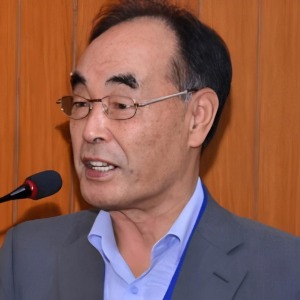
Dai Yeun Jeong
Asia Climate Change Education Center and Jeju National University, Korea, Republic of
Carme Ferre Pavia
Universitat Autonoma de Barcelona, Spain
Heather M Coleman
Ulster University, Ireland
Angela Vande
Vamde consulting, Canada
Bence Hernadi
University of Pannonia, Hungary
Tamaz Patarkalashvili
Technical University, Georgia


Title : Beyond 3R: The 4P proposal for strategic narratives on climate change
Carme Ferre Pavia, Universitat Autonoma de Barcelona, Spain
Title : Climate change and natural disasters: Predicting financial losses, managing volatility, and building financial resilience
Giuseppe Orlando, University of Bari, Italy
Title : Introducing the optimal carbon market: A comparative analysis of current conditions across four regions
Mohammad Imran Azizi, UNEP-Tongji Institute of Environment for Sustainable Development, China
Title : Turning waste into water treatment media: Waste-derived aggregates in nature-based solutions for treating diverse water matrices
Antonio Albuquerque, University of Beira Interior, Portugal
Title : Personalized, community- and population-related health in a changing and sustainable environment through the view of Personalized & Precision Healthcare (PPH): Its impact and role in preventing disease to maximize global health
Sergey Suchkov, N.D. Zelinskii Institute for Organic Chemistry of the Russian Academy of Sciences, Russian Federation
Title : Who bears the cost of a clean transition? Battery circularity and gender justice in India’s electric mobility shift
Sanoj, Jawaharlal Nehru University, Delhi, India