

Watershed management
Watershed management is a comprehensive approach to conserving and utilizing land, water, and other resources within a drainage basin to maintain ecological balance and support human needs. A watershed naturally channels rainfall and snowmelt into streams, rivers, and lakes, making it a vital unit for understanding water flow and resource distribution. Effective management considers soil conservation, reforestation, pollution control, and sustainable agriculture to reduce erosion, improve groundwater recharge, and ensure clean water supplies. By treating the watershed as a whole system, planners can prevent degradation, reduce sedimentation, and protect aquatic habitats. Community participation also plays a key role, as local practices directly affect water quality and land health.
Practical applications of watershed management extend to flood prevention, drought mitigation, and sustainable farming. For instance, building check dams, contour bunds, and rainwater harvesting structures improves water retention and reduces surface runoff. Riparian buffer zones and wetland restoration enhance biodiversity while filtering pollutants from agricultural or industrial sources. In urban areas, watershed-based planning helps reduce stormwater flooding and improves resilience against climate variability. Integration of geographic information systems, remote sensing, and hydrological models further strengthens decision-making by providing accurate data on land and water dynamics. Ultimately, watershed management promotes sustainable livelihoods, enhances ecosystem services, and secures water resources for future generations.
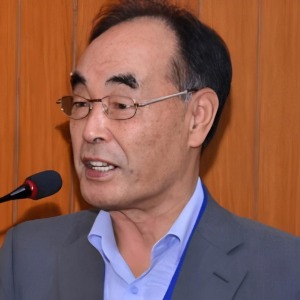
Dai Yeun Jeong
Asia Climate Change Education Center and Jeju National University, Korea, Republic of
Carme Ferre Pavia
Universitat Autonoma de Barcelona, Spain
Heather M Coleman
Ulster University, Ireland
Angela Vande
Vamde consulting, Canada
Bence Hernadi
University of Pannonia, Hungary
Tamaz Patarkalashvili
Technical University, Georgia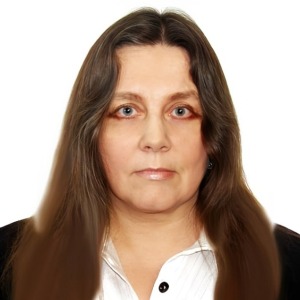


Title : Beyond 3R: The 4P proposal for strategic narratives on climate change
Carme Ferre Pavia, Universitat Autonoma de Barcelona, Spain
Title : Climate change and natural disasters: Predicting financial losses, managing volatility, and building financial resilience
Giuseppe Orlando, University of Bari, Italy
Title : Introducing the optimal carbon market: A comparative analysis of current conditions across four regions
Mohammad Imran Azizi, UNEP-Tongji Institute of Environment for Sustainable Development, China
Title : Turning waste into water treatment media: Waste-derived aggregates in nature-based solutions for treating diverse water matrices
Antonio Albuquerque, University of Beira Interior, Portugal
Title : Personalized, community- and population-related health in a changing and sustainable environment through the view of Personalized & Precision Healthcare (PPH): Its impact and role in preventing disease to maximize global health
Sergey Suchkov, N.D. Zelinskii Institute for Organic Chemistry of the Russian Academy of Sciences, Russian Federation
Title : Who bears the cost of a clean transition? Battery circularity and gender justice in India’s electric mobility shift
Sanoj, Jawaharlal Nehru University, Delhi, India