

Sustainable development
Sustainable development means growing in ways that take care of the economy, society, and environment equally. The goal is to meet current needs without depleting resources or harming the environment, so future generations can enjoy a similar or better quality of life. This approach includes reducing carbon footprints, conserving natural resources, and promoting renewable energy sources. The United Nations’ Sustainable Development Goals (SDGs) outline a global framework to tackle challenges such as poverty, climate change, and inequality. By integrating these goals into national policies and business strategies, sustainable development works toward creating a more equitable and resilient world.
The transition to sustainable development requires significant changes in how we produce and consume goods, how we manage land and water, and how we approach economic growth. This includes adopting cleaner technologies, improving energy efficiency, and fostering circular economies where waste is minimized, and products are reused or recycled. Sustainable development also focuses on social dimensions like improving education, health care, and access to clean water and sanitation. It promotes long-term thinking over short-term profits, recognizing that a thriving planet, stable societies, and a healthy economy are all interconnected. This holistic approach helps ensure that development is not just growth for growth's sake but a pathway to a more sustainable and just future.
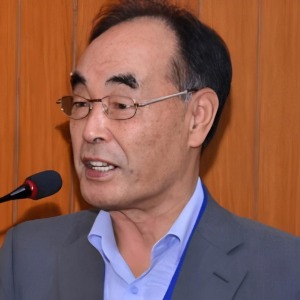
Dai Yeun Jeong
Asia Climate Change Education Center and Jeju National University, Korea, Republic of
Carme Ferre Pavia
Universitat Autonoma de Barcelona, Spain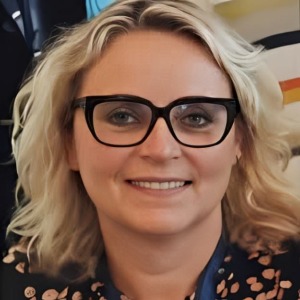
Heather M Coleman
Ulster University, Ireland
Angela Vande
Vamde consulting, Canada
Bence Hernadi
University of Pannonia, Hungary
Tamaz Patarkalashvili
Technical University, Georgia


Title : Beyond 3R: The 4P proposal for strategic narratives on climate change
Carme Ferre Pavia, Universitat Autonoma de Barcelona, Spain
Title : Climate change and natural disasters: Predicting financial losses, managing volatility, and building financial resilience
Giuseppe Orlando, University of Bari, Italy
Title : Introducing the optimal carbon market: A comparative analysis of current conditions across four regions
Mohammad Imran Azizi, UNEP-Tongji Institute of Environment for Sustainable Development, China
Title : Turning waste into water treatment media: Waste-derived aggregates in nature-based solutions for treating diverse water matrices
Antonio Albuquerque, University of Beira Interior, Portugal
Title : Personalized, community- and population-related health in a changing and sustainable environment through the view of Personalized & Precision Healthcare (PPH): Its impact and role in preventing disease to maximize global health
Sergey Suchkov, N.D. Zelinskii Institute for Organic Chemistry of the Russian Academy of Sciences, Russian Federation
Title : Who bears the cost of a clean transition? Battery circularity and gender justice in India’s electric mobility shift
Sanoj, Jawaharlal Nehru University, Delhi, India