

Rainwater harvesting
Rainwater harvesting is the practice of collecting and storing rainwater for future use, providing a sustainable way to conserve water and reduce pressure on traditional water supplies. This method involves capturing rainwater from rooftops, paved surfaces, or natural catchments, then channeling it into storage tanks or underground reservoirs. Especially valuable in areas facing water shortages or irregular rainfall, rainwater harvesting helps communities maintain a reliable supply for irrigation, household use, and even drinking after proper treatment. By supplementing groundwater and municipal water systems, it promotes water security and reduces the impact of droughts and water scarcity.
Besides conserving water, rainwater harvesting offers environmental benefits by reducing surface runoff, which lowers the risk of flooding and soil erosion. It also helps prevent contaminants from washing into rivers and lakes, protecting aquatic ecosystems. Rainwater harvesting systems can be simple or complex, depending on needs and resources, making them adaptable for urban and rural settings alike. Governments and environmental groups worldwide encourage rainwater harvesting as part of sustainable water management strategies. As climate change challenges water availability, adopting rainwater harvesting is a smart, eco-friendly solution that supports resilience and responsible resource use for communities everywhere.
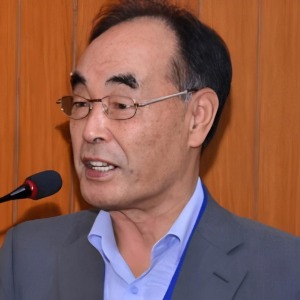
Dai Yeun Jeong
Asia Climate Change Education Center and Jeju National University, Korea, Republic of
Carme Ferre Pavia
Universitat Autonoma de Barcelona, Spain
Heather M Coleman
Ulster University, Ireland
Angela Vande
Vamde consulting, Canada
Bence Hernadi
University of Pannonia, Hungary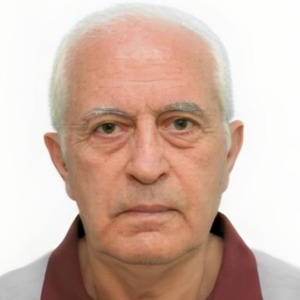
Tamaz Patarkalashvili
Technical University, Georgia


Title : Beyond 3R: The 4P proposal for strategic narratives on climate change
Carme Ferre Pavia, Universitat Autonoma de Barcelona, Spain
Title : Climate change and natural disasters: Predicting financial losses, managing volatility, and building financial resilience
Giuseppe Orlando, University of Bari, Italy
Title : Introducing the optimal carbon market: A comparative analysis of current conditions across four regions
Mohammad Imran Azizi, UNEP-Tongji Institute of Environment for Sustainable Development, China
Title : Turning waste into water treatment media: Waste-derived aggregates in nature-based solutions for treating diverse water matrices
Antonio Albuquerque, University of Beira Interior, Portugal
Title : Personalized, community- and population-related health in a changing and sustainable environment through the view of Personalized & Precision Healthcare (PPH): Its impact and role in preventing disease to maximize global health
Sergey Suchkov, N.D. Zelinskii Institute for Organic Chemistry of the Russian Academy of Sciences, Russian Federation
Title : Who bears the cost of a clean transition? Battery circularity and gender justice in India’s electric mobility shift
Sanoj, Jawaharlal Nehru University, Delhi, India