

Permaculture
Permaculture is a regenerative design approach that focuses on creating sustainable, self-sufficient systems by observing and mimicking natural ecosystems. Originally rooted in agriculture, permaculture now encompasses a broader philosophy for living in harmony with nature—integrating land, water, plants, animals, and people into productive and balanced environments. It is guided by three core ethics: care for the earth, care for people, and fair share (redistributing surplus to meet everyone’s needs). Techniques commonly used in permaculture include composting, companion planting, rainwater harvesting, food forests, and natural building methods. These practices work together to build healthy soils, conserve resources, and increase biodiversity.
Implementing permaculture offers significant benefits for both people and the planet. It reduces waste, enhances climate resilience, and supports local food systems, empowering communities to become more self-reliant and ecologically responsible. Permaculture systems are highly adaptable and can be applied in urban gardens, rural farms, schools, and community projects. By fostering closed-loop systems where outputs from one element become inputs for another, permaculture minimizes external inputs and maximizes efficiency. As environmental challenges grow, permaculture provides a forward-thinking model for sustainable living—encouraging innovation, resilience, and a deep respect for natural systems. It’s not just a method of growing food, but a way of life that nurtures both people and the planet.
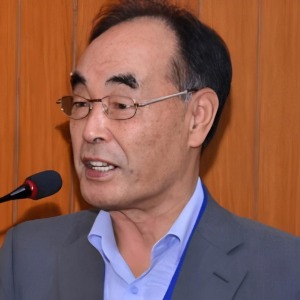
Dai Yeun Jeong
Asia Climate Change Education Center and Jeju National University, Korea, Republic of
Carme Ferre Pavia
Universitat Autonoma de Barcelona, Spain
Heather M Coleman
Ulster University, Ireland
Angela Vande
Vamde consulting, Canada
Bence Hernadi
University of Pannonia, Hungary
Tamaz Patarkalashvili
Technical University, Georgia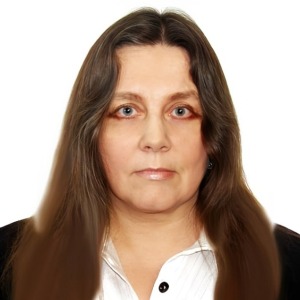


Title : Beyond 3R: The 4P proposal for strategic narratives on climate change
Carme Ferre Pavia, Universitat Autonoma de Barcelona, Spain
Title : Climate change and natural disasters: Predicting financial losses, managing volatility, and building financial resilience
Giuseppe Orlando, University of Bari, Italy
Title : Introducing the optimal carbon market: A comparative analysis of current conditions across four regions
Mohammad Imran Azizi, UNEP-Tongji Institute of Environment for Sustainable Development, China
Title : Turning waste into water treatment media: Waste-derived aggregates in nature-based solutions for treating diverse water matrices
Antonio Albuquerque, University of Beira Interior, Portugal
Title : Personalized, community- and population-related health in a changing and sustainable environment through the view of Personalized & Precision Healthcare (PPH): Its impact and role in preventing disease to maximize global health
Sergey Suchkov, N.D. Zelinskii Institute for Organic Chemistry of the Russian Academy of Sciences, Russian Federation
Title : Who bears the cost of a clean transition? Battery circularity and gender justice in India’s electric mobility shift
Sanoj, Jawaharlal Nehru University, Delhi, India