

Net zero emissions
The environment world is increasingly impacted by climate change, rising greenhouse gas concentrations, and the urgent need to transition toward sustainable energy systems. In this context, achieving net zero emissions has become a central goal for governments, industries, and communities worldwide. Net zero emissions refer to balancing the amount of greenhouse gases emitted into the atmosphere with the amount removed or offset through natural or technological means. This involves reducing fossil fuel consumption, enhancing energy efficiency, promoting renewable energy sources like solar and wind, and implementing carbon capture and storage solutions. Achieving net zero emissions not only mitigates the impacts of climate change but also drives technological innovation, creates green jobs, and improves air quality and public health.
Realizing net zero emissions requires comprehensive strategies that combine policy, technological innovation, and societal engagement. Governments can implement carbon pricing, emissions trading systems, and regulatory frameworks to incentivize low-carbon practices. Industries and businesses must adopt sustainable production processes and invest in clean energy solutions. Communities and individuals also play a crucial role by reducing energy consumption, embracing sustainable transportation, and supporting low-carbon initiatives. Long-term commitment to net zero targets encourages global cooperation, strengthens climate resilience, and ensures a sustainable future. By striving toward net zero emissions, societies can protect ecosystems, safeguard human health, and secure economic and environmental stability for current and future generations.
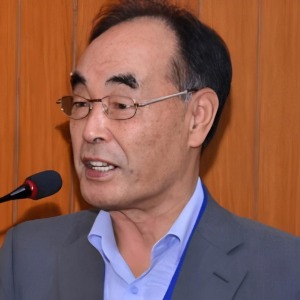
Dai Yeun Jeong
Asia Climate Change Education Center and Jeju National University, Korea, Republic of
Carme Ferre Pavia
Universitat Autonoma de Barcelona, Spain
Heather M Coleman
Ulster University, Ireland
Angela Vande
Vamde consulting, Canada
Bence Hernadi
University of Pannonia, Hungary
Tamaz Patarkalashvili
Technical University, Georgia


Title : Beyond 3R: The 4P proposal for strategic narratives on climate change
Carme Ferre Pavia, Universitat Autonoma de Barcelona, Spain
Title : Climate change and natural disasters: Predicting financial losses, managing volatility, and building financial resilience
Giuseppe Orlando, University of Bari, Italy
Title : Introducing the optimal carbon market: A comparative analysis of current conditions across four regions
Mohammad Imran Azizi, UNEP-Tongji Institute of Environment for Sustainable Development, China
Title : Turning waste into water treatment media: Waste-derived aggregates in nature-based solutions for treating diverse water matrices
Antonio Albuquerque, University of Beira Interior, Portugal
Title : Personalized, community- and population-related health in a changing and sustainable environment through the view of Personalized & Precision Healthcare (PPH): Its impact and role in preventing disease to maximize global health
Sergey Suchkov, N.D. Zelinskii Institute for Organic Chemistry of the Russian Academy of Sciences, Russian Federation
Title : Who bears the cost of a clean transition? Battery circularity and gender justice in India’s electric mobility shift
Sanoj, Jawaharlal Nehru University, Delhi, India