

Green roofs
Green roofs are building rooftops that are partially or fully covered with vegetation, soil layers, and drainage systems, designed to mimic natural landscapes while offering practical environmental benefits. By absorbing rainfall, they reduce stormwater runoff, lower the risk of flooding, and filter pollutants before water enters drainage systems. The soil and plants also provide insulation, helping to regulate indoor temperatures by keeping buildings cooler in summer and warmer in winter. This energy efficiency reduces reliance on heating and cooling systems, cutting costs and lowering greenhouse gas emissions. Additionally, green roofs extend the lifespan of roofing materials by protecting them from ultraviolet radiation and extreme temperature fluctuations.
Beyond their functional role, green roofs contribute significantly to urban sustainability and livability. They provide habitats for pollinators and birds, increase green space in densely built areas, and help mitigate the urban heat island effect by cooling surrounding air. In commercial and residential settings, they can also be designed as recreational or community spaces, enhancing mental well-being and property value. Advances in lightweight materials and modular systems have made green roofs easier to install and maintain, even on existing buildings. When combined with other sustainable infrastructure such as rain gardens and permeable pavements, they form an integral part of climate-resilient city planning. Ultimately, green roofs transform underutilized rooftops into productive, eco-friendly landscapes that support both people and the environment.
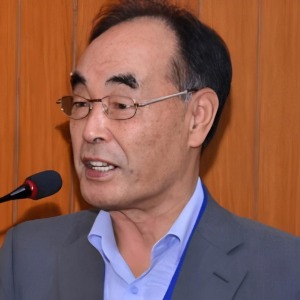
Dai Yeun Jeong
Asia Climate Change Education Center and Jeju National University, Korea, Republic of
Carme Ferre Pavia
Universitat Autonoma de Barcelona, Spain
Heather M Coleman
Ulster University, Ireland
Angela Vande
Vamde consulting, Canada
Bence Hernadi
University of Pannonia, Hungary
Tamaz Patarkalashvili
Technical University, Georgia


Title : Beyond 3R: The 4P proposal for strategic narratives on climate change
Carme Ferre Pavia, Universitat Autonoma de Barcelona, Spain
Title : Climate change and natural disasters: Predicting financial losses, managing volatility, and building financial resilience
Giuseppe Orlando, University of Bari, Italy
Title : Introducing the optimal carbon market: A comparative analysis of current conditions across four regions
Mohammad Imran Azizi, UNEP-Tongji Institute of Environment for Sustainable Development, China
Title : Turning waste into water treatment media: Waste-derived aggregates in nature-based solutions for treating diverse water matrices
Antonio Albuquerque, University of Beira Interior, Portugal
Title : Personalized, community- and population-related health in a changing and sustainable environment through the view of Personalized & Precision Healthcare (PPH): Its impact and role in preventing disease to maximize global health
Sergey Suchkov, N.D. Zelinskii Institute for Organic Chemistry of the Russian Academy of Sciences, Russian Federation
Title : Who bears the cost of a clean transition? Battery circularity and gender justice in India’s electric mobility shift
Sanoj, Jawaharlal Nehru University, Delhi, India