

Green building standards
Green building standards focus on designing, constructing, and operating buildings in ways that minimize environmental impact, enhance energy efficiency, and promote occupant health. These standards address sustainable use of materials, water conservation, waste reduction, and reduction of greenhouse gas emissions. By integrating renewable energy sources, efficient HVAC systems, and natural lighting, green buildings reduce operational costs and carbon footprints while creating healthier indoor environments. Compliance with recognized certification programs such as LEED, BREEAM, or IGBC ensures that buildings meet rigorous environmental and sustainability criteria. Adopting green standards also encourages innovation in construction technologies and promotes long-term cost savings for owners and occupants. It reduces strain on local utilities and infrastructure while enhancing resilience against climate change. Green buildings contribute to urban biodiversity by incorporating green roofs, vertical gardens, and landscaped areas. They also improve social well-being by creating healthier, more comfortable living and working spaces.
Implementation of green building standards involves careful planning, selection of sustainable materials, and incorporation of energy-efficient technologies. Water-saving fixtures, rainwater harvesting, and greywater recycling contribute to resource efficiency, while proper insulation, smart lighting, and ventilation systems improve energy performance. Lifecycle assessments and performance monitoring help track environmental benefits and guide improvements. Public awareness and training for architects, engineers, and contractors are essential for widespread adoption.
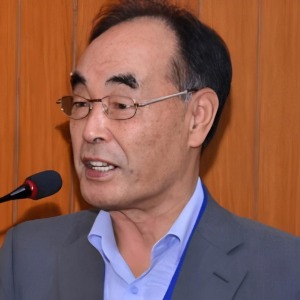
Dai Yeun Jeong
Asia Climate Change Education Center and Jeju National University, Korea, Republic of
Carme Ferre Pavia
Universitat Autonoma de Barcelona, Spain
Heather M Coleman
Ulster University, Ireland
Angela Vande
Vamde consulting, Canada
Bence Hernadi
University of Pannonia, Hungary
Tamaz Patarkalashvili
Technical University, Georgia


Title : Beyond 3R: The 4P proposal for strategic narratives on climate change
Carme Ferre Pavia, Universitat Autonoma de Barcelona, Spain
Title : Climate change and natural disasters: Predicting financial losses, managing volatility, and building financial resilience
Giuseppe Orlando, University of Bari, Italy
Title : Introducing the optimal carbon market: A comparative analysis of current conditions across four regions
Mohammad Imran Azizi, UNEP-Tongji Institute of Environment for Sustainable Development, China
Title : Turning waste into water treatment media: Waste-derived aggregates in nature-based solutions for treating diverse water matrices
Antonio Albuquerque, University of Beira Interior, Portugal
Title : Personalized, community- and population-related health in a changing and sustainable environment through the view of Personalized & Precision Healthcare (PPH): Its impact and role in preventing disease to maximize global health
Sergey Suchkov, N.D. Zelinskii Institute for Organic Chemistry of the Russian Academy of Sciences, Russian Federation
Title : Who bears the cost of a clean transition? Battery circularity and gender justice in India’s electric mobility shift
Sanoj, Jawaharlal Nehru University, Delhi, India