

Environmental displacement
In the context of the environment world, environmental displacement is becoming an increasingly urgent issue as climate change intensifies natural disasters and degrades ecosystems. Environmental displacement occurs when communities are forced to leave their homes due to environmental factors such as rising sea levels, extreme weather events, desertification, or resource depletion. Coastal populations are particularly vulnerable, with rising seas threatening to submerge low-lying islands and coastal cities. Similarly, droughts and land degradation can make farming impossible, pushing rural populations to migrate in search of more sustainable living conditions. This growing movement of climate refugees highlights the complex social and humanitarian challenges that arise from environmental change.
The impacts of environmental displacement extend far beyond the immediate loss of homes. Displaced communities often face social, economic, and political instability, struggling to access resources, employment, and healthcare in new locations. The disruption can lead to cultural loss and increased tensions in host regions. Addressing environmental displacement requires integrated strategies that combine climate adaptation, sustainable development, and human rights protections. International cooperation and proactive planning are essential to support vulnerable populations and reduce forced migration. By recognizing and responding to environmental displacement, the global community can work toward solutions that uphold both environmental sustainability and human dignity in a changing world.
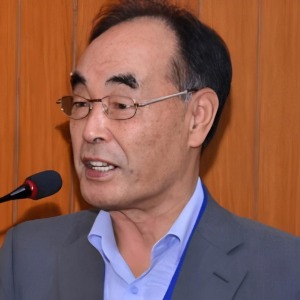
Dai Yeun Jeong
Asia Climate Change Education Center and Jeju National University, Korea, Republic of
Carme Ferre Pavia
Universitat Autonoma de Barcelona, Spain
Heather M Coleman
Ulster University, Ireland
Angela Vande
Vamde consulting, Canada
Bence Hernadi
University of Pannonia, Hungary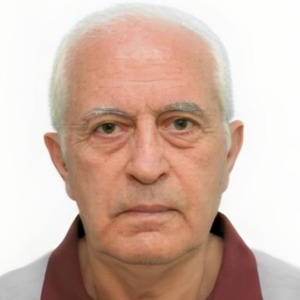
Tamaz Patarkalashvili
Technical University, Georgia


Title : Beyond 3R: The 4P proposal for strategic narratives on climate change
Carme Ferre Pavia, Universitat Autonoma de Barcelona, Spain
Title : Climate change and natural disasters: Predicting financial losses, managing volatility, and building financial resilience
Giuseppe Orlando, University of Bari, Italy
Title : Introducing the optimal carbon market: A comparative analysis of current conditions across four regions
Mohammad Imran Azizi, UNEP-Tongji Institute of Environment for Sustainable Development, China
Title : Turning waste into water treatment media: Waste-derived aggregates in nature-based solutions for treating diverse water matrices
Antonio Albuquerque, University of Beira Interior, Portugal
Title : Personalized, community- and population-related health in a changing and sustainable environment through the view of Personalized & Precision Healthcare (PPH): Its impact and role in preventing disease to maximize global health
Sergey Suchkov, N.D. Zelinskii Institute for Organic Chemistry of the Russian Academy of Sciences, Russian Federation
Title : Who bears the cost of a clean transition? Battery circularity and gender justice in India’s electric mobility shift
Sanoj, Jawaharlal Nehru University, Delhi, India