

Drought adaptation strategies
Droughts have increasingly become a critical challenge for water security, agriculture, and livelihoods, particularly in regions experiencing climate variability and prolonged dry periods. Reduced rainfall, depleted groundwater, and changing precipitation patterns lead to crop failures, water shortages, soil degradation, and economic losses. Communities that lack resilient water management systems or adaptive agricultural practices are particularly vulnerable, resulting in food insecurity, migration pressures, and social tensions. The severity and frequency of drought events underscore the need for proactive strategies that enhance preparedness and minimize environmental, economic, and social impacts.
Drought adaptation strategies involve a combination of technological, ecological, and policy-driven measures to mitigate risks and enhance resilience. Water-saving techniques such as drip irrigation, rainwater harvesting, and soil moisture management improve efficiency and reduce dependency on scarce resources. Land management practices, including crop diversification, drought-resistant varieties, and agroforestry, help maintain productivity under water stress. Institutional measures, such as early-warning systems, water allocation policies, and community-based planning, ensure coordinated responses to emerging drought threats. By integrating these approaches, drought adaptation strategies not only reduce vulnerability but also promote sustainable resource management, ecosystem preservation, and community resilience, enabling societies to withstand and recover from the increasingly frequent and severe impacts of drought.
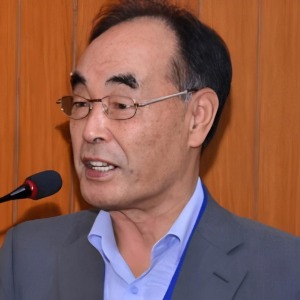
Dai Yeun Jeong
Asia Climate Change Education Center and Jeju National University, Korea, Republic of
Carme Ferre Pavia
Universitat Autonoma de Barcelona, Spain
Heather M Coleman
Ulster University, Ireland
Angela Vande
Vamde consulting, Canada
Bence Hernadi
University of Pannonia, Hungary
Tamaz Patarkalashvili
Technical University, Georgia


Title : Beyond 3R: The 4P proposal for strategic narratives on climate change
Carme Ferre Pavia, Universitat Autonoma de Barcelona, Spain
Title : Climate change and natural disasters: Predicting financial losses, managing volatility, and building financial resilience
Giuseppe Orlando, University of Bari, Italy
Title : Introducing the optimal carbon market: A comparative analysis of current conditions across four regions
Mohammad Imran Azizi, UNEP-Tongji Institute of Environment for Sustainable Development, China
Title : Turning waste into water treatment media: Waste-derived aggregates in nature-based solutions for treating diverse water matrices
Antonio Albuquerque, University of Beira Interior, Portugal
Title : Personalized, community- and population-related health in a changing and sustainable environment through the view of Personalized & Precision Healthcare (PPH): Its impact and role in preventing disease to maximize global health
Sergey Suchkov, N.D. Zelinskii Institute for Organic Chemistry of the Russian Academy of Sciences, Russian Federation
Title : Who bears the cost of a clean transition? Battery circularity and gender justice in India’s electric mobility shift
Sanoj, Jawaharlal Nehru University, Delhi, India