

Circular economy
The circular economy is an innovative approach to production and consumption that aims to eliminate waste and maximize the continual use of resources. Rather than following the traditional linear model of "take, make, dispose," the circular economy focuses on designing products and systems that allow materials to be reused, refurbished, or recycled, creating a closed-loop system. This not only conserves raw materials but also significantly reduces environmental impacts such as pollution and greenhouse gas emissions. Industries are now rethinking product design to ensure durability, easy disassembly, and recyclability, while also embracing renewable energy and sustainable sourcing practices.
In addition to its environmental advantages, the circular economy offers strong economic and social benefits. It promotes innovation by encouraging new business models such as product-as-a-service, repair and resale platforms, and material recovery services. These models generate employment, especially in sectors like recycling, logistics, and green manufacturing. By reducing dependency on finite resources and minimizing waste, the circular economy enhances resilience against global supply chain disruptions. Governments and organizations worldwide are beginning to integrate circular principles into policies and strategies to build sustainable economies. Ultimately, the circular economy is not just a technical solution—it represents a fundamental shift in mindset toward sustainability, responsibility, and long-term prosperity.
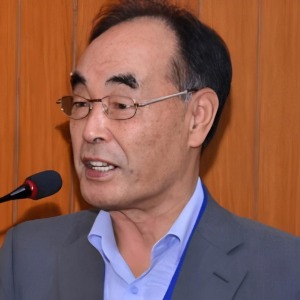
Dai Yeun Jeong
Asia Climate Change Education Center and Jeju National University, Korea, Republic of
Carme Ferre Pavia
Universitat Autonoma de Barcelona, Spain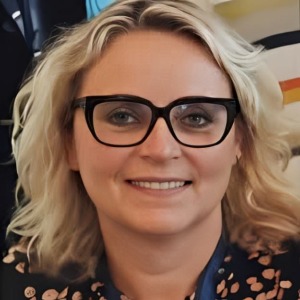
Heather M Coleman
Ulster University, Ireland
Angela Vande
Vamde consulting, Canada
Bence Hernadi
University of Pannonia, Hungary
Tamaz Patarkalashvili
Technical University, Georgia


Title : Beyond 3R: The 4P proposal for strategic narratives on climate change
Carme Ferre Pavia, Universitat Autonoma de Barcelona, Spain
Title : Climate change and natural disasters: Predicting financial losses, managing volatility, and building financial resilience
Giuseppe Orlando, University of Bari, Italy
Title : Introducing the optimal carbon market: A comparative analysis of current conditions across four regions
Mohammad Imran Azizi, UNEP-Tongji Institute of Environment for Sustainable Development, China
Title : Turning waste into water treatment media: Waste-derived aggregates in nature-based solutions for treating diverse water matrices
Antonio Albuquerque, University of Beira Interior, Portugal
Title : Personalized, community- and population-related health in a changing and sustainable environment through the view of Personalized & Precision Healthcare (PPH): Its impact and role in preventing disease to maximize global health
Sergey Suchkov, N.D. Zelinskii Institute for Organic Chemistry of the Russian Academy of Sciences, Russian Federation
Title : Who bears the cost of a clean transition? Battery circularity and gender justice in India’s electric mobility shift
Sanoj, Jawaharlal Nehru University, Delhi, India