

Carbon Footprint Reduction Advisor
Reducing greenhouse gas emissions is central to mitigating climate change and promoting sustainable development. A carbon footprint reduction advisor plays a key role in guiding organizations, communities, and governments toward strategies that minimize carbon emissions and enhance environmental responsibility. These professionals analyze energy consumption patterns, industrial processes, transportation systems, and resource use to identify areas where emissions can be reduced effectively. A carbon footprint reduction advisor develops and implements actionable plans, including energy efficiency measures, renewable energy adoption, sustainable supply chain management, and behavioral change initiatives. Collaboration is essential, as they work closely with stakeholders, including corporate leadership, policy makers, engineers, and community representatives, to ensure strategies are practical, measurable, and aligned with broader climate goals. Advanced tools such as carbon accounting software, life-cycle assessment models, and emissions monitoring systems support the work of carbon footprint reduction advisors, enabling precise measurement, tracking, and reporting of progress. Beyond technical guidance, these professionals also play a role in raising awareness, promoting sustainability education, and shaping policies that encourage low-carbon practices. By addressing both operational and behavioral aspects of carbon emissions, carbon footprint reduction advisors help organizations achieve tangible reductions while contributing to long-term environmental resilience. Their expertise ensures that sustainability initiatives are data-driven, cost-effective, and strategically targeted, fostering a culture of accountability and climate-conscious decision-making that benefits ecosystems, communities, and future generations.
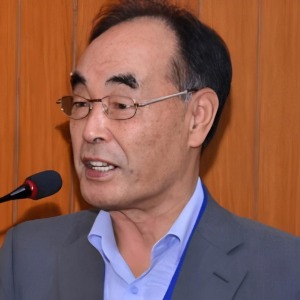
Dai Yeun Jeong
Asia Climate Change Education Center and Jeju National University, Korea, Republic of
Carme Ferre Pavia
Universitat Autonoma de Barcelona, Spain
Heather M Coleman
Ulster University, Ireland
Angela Vande
Vamde consulting, Canada
Bence Hernadi
University of Pannonia, Hungary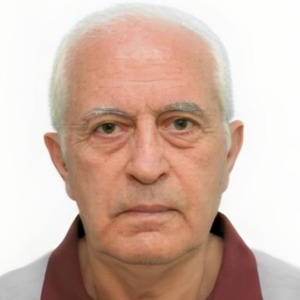
Tamaz Patarkalashvili
Technical University, Georgia


Title : Beyond 3R: The 4P proposal for strategic narratives on climate change
Carme Ferre Pavia, Universitat Autonoma de Barcelona, Spain
Title : Climate change and natural disasters: Predicting financial losses, managing volatility, and building financial resilience
Giuseppe Orlando, University of Bari, Italy
Title : Introducing the optimal carbon market: A comparative analysis of current conditions across four regions
Mohammad Imran Azizi, UNEP-Tongji Institute of Environment for Sustainable Development, China
Title : Turning waste into water treatment media: Waste-derived aggregates in nature-based solutions for treating diverse water matrices
Antonio Albuquerque, University of Beira Interior, Portugal
Title : Personalized, community- and population-related health in a changing and sustainable environment through the view of Personalized & Precision Healthcare (PPH): Its impact and role in preventing disease to maximize global health
Sergey Suchkov, N.D. Zelinskii Institute for Organic Chemistry of the Russian Academy of Sciences, Russian Federation
Title : Who bears the cost of a clean transition? Battery circularity and gender justice in India’s electric mobility shift
Sanoj, Jawaharlal Nehru University, Delhi, India