

Afforestation
Afforestation is the act of planting trees in areas where there were no previous forests or where forests have been lost for a long time. This practice is a key solution in addressing environmental issues such as climate change and land degradation. Trees planted through afforestation absorb carbon dioxide from the atmosphere, helping to reduce greenhouse gases that contribute to global warming. Additionally, afforestation promotes biodiversity by creating new habitats for wildlife, which supports the balance of ecosystems. It also protects the soil from erosion by stabilizing it with roots, improving land fertility and preventing desertification. In this way, afforestation can transform barren or degraded lands into vibrant, green ecosystems that benefit both nature and humans.
Beyond ecological benefits, afforestation also has important social and economic impacts. It helps improve air and water quality, making local environments healthier for communities. Forested areas help regulate water cycles, ensuring clean water for agriculture and consumption. Afforestation initiatives can create employment opportunities in rural areas through tree planting, forest maintenance, and sustainable harvesting, thereby supporting livelihoods. However, to be effective and sustainable, afforestation efforts must be well-planned, using native species to avoid disrupting local ecosystems. When done responsibly, afforestation is a powerful tool in restoring environmental health and building resilience against climate change.
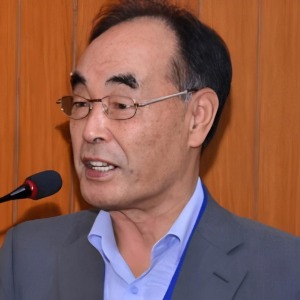
Dai Yeun Jeong
Asia Climate Change Education Center and Jeju National University, Korea, Republic of
Carme Ferre Pavia
Universitat Autonoma de Barcelona, Spain
Heather M Coleman
Ulster University, Ireland
Angela Vande
Vamde consulting, Canada
Bence Hernadi
University of Pannonia, Hungary
Tamaz Patarkalashvili
Technical University, Georgia


Title : Beyond 3R: The 4P proposal for strategic narratives on climate change
Carme Ferre Pavia, Universitat Autonoma de Barcelona, Spain
Title : Climate change and natural disasters: Predicting financial losses, managing volatility, and building financial resilience
Giuseppe Orlando, University of Bari, Italy
Title : Introducing the optimal carbon market: A comparative analysis of current conditions across four regions
Mohammad Imran Azizi, UNEP-Tongji Institute of Environment for Sustainable Development, China
Title : Turning waste into water treatment media: Waste-derived aggregates in nature-based solutions for treating diverse water matrices
Antonio Albuquerque, University of Beira Interior, Portugal
Title : Personalized, community- and population-related health in a changing and sustainable environment through the view of Personalized & Precision Healthcare (PPH): Its impact and role in preventing disease to maximize global health
Sergey Suchkov, N.D. Zelinskii Institute for Organic Chemistry of the Russian Academy of Sciences, Russian Federation
Title : Who bears the cost of a clean transition? Battery circularity and gender justice in India’s electric mobility shift
Sanoj, Jawaharlal Nehru University, Delhi, India