

Stormwater management
Stormwater management is the practice of controlling and utilizing rainwater runoff in ways that reduce flooding, protect water quality, and safeguard infrastructure. As cities expand with more paved surfaces, rainwater is less able to infiltrate into the soil, leading to rapid surface runoff that can overwhelm drainage systems. Effective strategies include building detention ponds, retention basins, infiltration trenches, and permeable pavements to capture and slowly release water. These systems help reduce peak flow during heavy rainfall events, lowering the risk of urban flooding and erosion. Additionally, stormwater can carry pollutants such as oil, heavy metals, and sediments, making its proper management essential for maintaining the health of rivers, lakes, and groundwater.
Modern approaches emphasize combining engineering solutions with natural processes to create sustainable outcomes. Green infrastructure such as bioswales, rain gardens, and constructed wetlands filters contaminants while providing aesthetic and ecological benefits. In many regions, stormwater is also harvested and reused for irrigation, reducing pressure on potable water supplies. Advanced monitoring and modeling technologies support the design of systems tailored to local conditions, climate variability, and land-use patterns. By integrating environmental, social, and economic considerations, stormwater management not only reduces disaster risks but also enhances urban resilience and sustainability. It plays a vital role in adapting to climate change while improving the quality of life in growing cities.
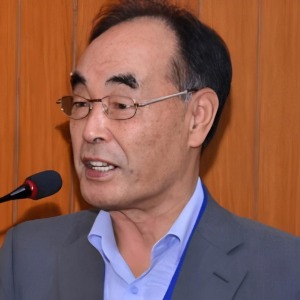
Dai Yeun Jeong
Asia Climate Change Education Center and Jeju National University, Korea, Republic of
Carme Ferre Pavia
Universitat Autonoma de Barcelona, Spain
Heather M Coleman
Ulster University, Ireland
Angela Vande
Vamde consulting, Canada
Bence Hernadi
University of Pannonia, Hungary
Tamaz Patarkalashvili
Technical University, Georgia


Title : Beyond 3R: The 4P proposal for strategic narratives on climate change
Carme Ferre Pavia, Universitat Autonoma de Barcelona, Spain
Title : Climate change and natural disasters: Predicting financial losses, managing volatility, and building financial resilience
Giuseppe Orlando, University of Bari, Italy
Title : Introducing the optimal carbon market: A comparative analysis of current conditions across four regions
Mohammad Imran Azizi, UNEP-Tongji Institute of Environment for Sustainable Development, China
Title : Turning waste into water treatment media: Waste-derived aggregates in nature-based solutions for treating diverse water matrices
Antonio Albuquerque, University of Beira Interior, Portugal
Title : Personalized, community- and population-related health in a changing and sustainable environment through the view of Personalized & Precision Healthcare (PPH): Its impact and role in preventing disease to maximize global health
Sergey Suchkov, N.D. Zelinskii Institute for Organic Chemistry of the Russian Academy of Sciences, Russian Federation
Title : Who bears the cost of a clean transition? Battery circularity and gender justice in India’s electric mobility shift
Sanoj, Jawaharlal Nehru University, Delhi, India