
Pollution Prevention Program Director
Preventing environmental damage before it occurs is increasingly recognized as one of the most effective ways to safeguard ecosystems and public health. Instead of relying only on after-the-fact cleanup measures, many organizations are turning toward approaches that address pollutants at their origin. The expertise of a pollution prevention program director becomes essential here, as this role focuses on redesigning processes, encouraging sustainable materials, and advancing technologies that reduce waste generation. By embedding preventive measures into planning and operations, industries can simultaneously cut costs, improve efficiency, and meet regulatory expectations while reducing ecological harm.
Leadership in this area requires both technical understanding and the ability to drive cross-sector collaboration. The pollution prevention program director often works alongside policymakers, engineers, and community representatives to establish strategies that make cleaner production achievable. Their initiatives may include launching educational campaigns, supporting green chemistry, or developing metrics that track reductions in emissions and waste. More than a managerial role, it is one that shapes cultural change, shifting the mindset from reactive fixes to proactive responsibility. By steering organizations toward prevention, this director helps build a foundation for sustainable development that protects natural systems while fostering resilient economies.
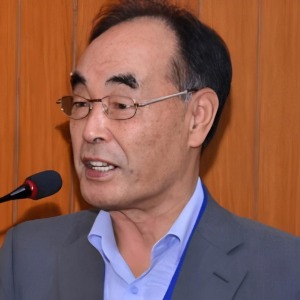
Dai Yeun Jeong
Asia Climate Change Education Center and Jeju National University, Korea, Republic of
Carme Ferre Pavia
Universitat Autonoma de Barcelona, Spain
Heather M Coleman
Ulster University, Ireland
Angela Vande
Vamde consulting, Canada
Bence Hernadi
University of Pannonia, Hungary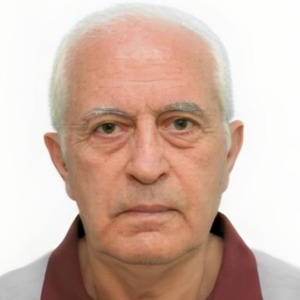
Tamaz Patarkalashvili
Technical University, Georgia


Title : Beyond 3R: The 4P proposal for strategic narratives on climate change
Carme Ferre Pavia, Universitat Autonoma de Barcelona, Spain
Title : Climate change and natural disasters: Predicting financial losses, managing volatility, and building financial resilience
Giuseppe Orlando, University of Bari, Italy
Title : Introducing the optimal carbon market: A comparative analysis of current conditions across four regions
Mohammad Imran Azizi, UNEP-Tongji Institute of Environment for Sustainable Development, China
Title : Turning waste into water treatment media: Waste-derived aggregates in nature-based solutions for treating diverse water matrices
Antonio Albuquerque, University of Beira Interior, Portugal
Title : Personalized, community- and population-related health in a changing and sustainable environment through the view of Personalized & Precision Healthcare (PPH): Its impact and role in preventing disease to maximize global health
Sergey Suchkov, N.D. Zelinskii Institute for Organic Chemistry of the Russian Academy of Sciences, Russian Federation
Title : Who bears the cost of a clean transition? Battery circularity and gender justice in India’s electric mobility shift
Sanoj, Jawaharlal Nehru University, Delhi, India