

One Health and environment
The concept of One Health and environment highlights the interconnectedness of human health, animal health, and the health of ecosystems. It recognizes that diseases often emerge and spread due to disruptions in the environment, such as habitat destruction, pollution, and climate change. By adopting a One Health approach, experts from medicine, veterinary science, and environmental science work together to understand and manage health risks that cross species and ecosystems. Protecting wildlife habitats, controlling pollution, and promoting sustainable land use are all crucial steps in preventing zoonotic diseases—those transmitted from animals to humans—and ensuring the health of the planet as a whole.
In the wider environment world, One Health and environment encourages integrated policies that address public health, biodiversity conservation, and ecosystem resilience simultaneously. This collaborative approach is vital in tackling challenges like antibiotic resistance, emerging infectious diseases, and environmental degradation. By fostering cross-sector partnerships and community involvement, One Health promotes sustainable practices that benefit people, animals, and nature alike. Ultimately, embracing One Health helps create healthier ecosystems and societies, reinforcing the vital connections that sustain life on Earth. This holistic perspective is essential for building a resilient environment world in the face of growing global health and environmental threats.
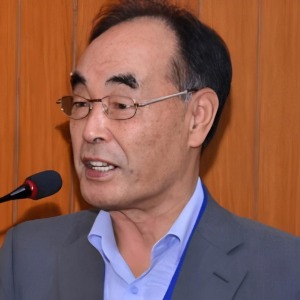
Dai Yeun Jeong
Asia Climate Change Education Center and Jeju National University, Korea, Republic of
Carme Ferre Pavia
Universitat Autonoma de Barcelona, Spain
Heather M Coleman
Ulster University, Ireland
Angela Vande
Vamde consulting, Canada
Bence Hernadi
University of Pannonia, Hungary
Tamaz Patarkalashvili
Technical University, Georgia


Title : Beyond 3R: The 4P proposal for strategic narratives on climate change
Carme Ferre Pavia, Universitat Autonoma de Barcelona, Spain
Title : Climate change and natural disasters: Predicting financial losses, managing volatility, and building financial resilience
Giuseppe Orlando, University of Bari, Italy
Title : Introducing the optimal carbon market: A comparative analysis of current conditions across four regions
Mohammad Imran Azizi, UNEP-Tongji Institute of Environment for Sustainable Development, China
Title : Turning waste into water treatment media: Waste-derived aggregates in nature-based solutions for treating diverse water matrices
Antonio Albuquerque, University of Beira Interior, Portugal
Title : Personalized, community- and population-related health in a changing and sustainable environment through the view of Personalized & Precision Healthcare (PPH): Its impact and role in preventing disease to maximize global health
Sergey Suchkov, N.D. Zelinskii Institute for Organic Chemistry of the Russian Academy of Sciences, Russian Federation
Title : Who bears the cost of a clean transition? Battery circularity and gender justice in India’s electric mobility shift
Sanoj, Jawaharlal Nehru University, Delhi, India