

Low carbon economy
A low carbon economy is an economic system aimed at minimizing greenhouse gas emissions while promoting sustainable growth and development. It focuses on reducing carbon dioxide and other harmful emissions primarily by shifting from fossil fuel-based energy sources to renewable alternatives such as solar, wind, and hydroelectric power. This transformation involves adopting cleaner technologies, improving energy efficiency, and encouraging sustainable transportation and industrial practices. A low carbon economy not only helps combat climate change but also fosters innovation, job creation in green sectors, and greater energy security by reducing dependence on imported fuels. It also encourages sustainable consumption patterns and supports circular economy practices that minimize waste and resource depletion.
Transitioning to a low carbon economy requires coordinated efforts from governments, businesses, and individuals. Policies like carbon pricing, emissions trading systems, and renewable energy incentives are critical tools to drive this shift. Additionally, investments in research and development enable the growth of new clean technologies and infrastructure. Social acceptance and behavioral changes also play an essential role in reducing carbon footprints at the community and household levels. By embracing a low carbon economy, societies can ensure environmental protection, economic resilience, and improved quality of life for current and future generations. Long-term commitment to low carbon strategies also strengthens global cooperation and drives progress toward international climate goals.
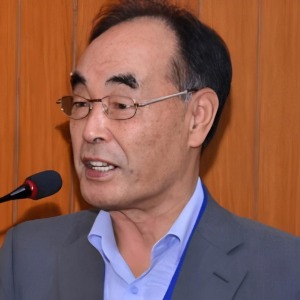
Dai Yeun Jeong
Asia Climate Change Education Center and Jeju National University, Korea, Republic of
Carme Ferre Pavia
Universitat Autonoma de Barcelona, Spain
Heather M Coleman
Ulster University, Ireland
Angela Vande
Vamde consulting, Canada
Bence Hernadi
University of Pannonia, Hungary
Tamaz Patarkalashvili
Technical University, Georgia


Title : Beyond 3R: The 4P proposal for strategic narratives on climate change
Carme Ferre Pavia, Universitat Autonoma de Barcelona, Spain
Title : Climate change and natural disasters: Predicting financial losses, managing volatility, and building financial resilience
Giuseppe Orlando, University of Bari, Italy
Title : Introducing the optimal carbon market: A comparative analysis of current conditions across four regions
Mohammad Imran Azizi, UNEP-Tongji Institute of Environment for Sustainable Development, China
Title : Turning waste into water treatment media: Waste-derived aggregates in nature-based solutions for treating diverse water matrices
Antonio Albuquerque, University of Beira Interior, Portugal
Title : Personalized, community- and population-related health in a changing and sustainable environment through the view of Personalized & Precision Healthcare (PPH): Its impact and role in preventing disease to maximize global health
Sergey Suchkov, N.D. Zelinskii Institute for Organic Chemistry of the Russian Academy of Sciences, Russian Federation
Title : Who bears the cost of a clean transition? Battery circularity and gender justice in India’s electric mobility shift
Sanoj, Jawaharlal Nehru University, Delhi, India