

Greenhouse gases
Greenhouse gases are atmospheric gases that trap heat in the Earth’s atmosphere, creating the natural greenhouse effect that maintains temperatures suitable for life. The most common greenhouse gases include carbon dioxide (CO2), methane (CH2), nitrous oxide (N2O), and fluorinated gases. These gases allow sunlight to enter the atmosphere freely but absorb and re-emit heat energy, preventing it from escaping into space. While this process is essential for life on Earth, human activities such as burning fossil fuels, deforestation, and industrial processes have greatly increased the concentration of greenhouse gases, intensifying global warming.
This rise in greenhouse gases is a primary driver of climate change, leading to higher global temperatures, melting ice caps, sea-level rise, and more extreme weather events like hurricanes and droughts. Carbon dioxide, primarily generated from the combustion of coal, oil, and natural gas, is the most prevalent human-made greenhouse gas. Methane, released from agriculture, landfills, and fossil fuel extraction, is far more potent in trapping heat but exists in smaller amounts. To reduce greenhouse gas emissions, the world is shifting towards renewable energy sources, improving energy efficiency, and protecting natural carbon sinks such as forests. International agreements like the Paris Agreement aim to limit global temperature rise and encourage countries to commit to reducing emissions to protect the planet.
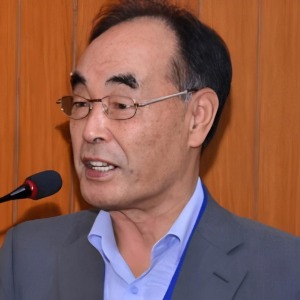
Dai Yeun Jeong
Asia Climate Change Education Center and Jeju National University, Korea, Republic of
Carme Ferre Pavia
Universitat Autonoma de Barcelona, Spain
Heather M Coleman
Ulster University, Ireland
Angela Vande
Vamde consulting, Canada
Bence Hernadi
University of Pannonia, Hungary
Tamaz Patarkalashvili
Technical University, Georgia


Title : Beyond 3R: The 4P proposal for strategic narratives on climate change
Carme Ferre Pavia, Universitat Autonoma de Barcelona, Spain
Title : Climate change and natural disasters: Predicting financial losses, managing volatility, and building financial resilience
Giuseppe Orlando, University of Bari, Italy
Title : Introducing the optimal carbon market: A comparative analysis of current conditions across four regions
Mohammad Imran Azizi, UNEP-Tongji Institute of Environment for Sustainable Development, China
Title : Turning waste into water treatment media: Waste-derived aggregates in nature-based solutions for treating diverse water matrices
Antonio Albuquerque, University of Beira Interior, Portugal
Title : Personalized, community- and population-related health in a changing and sustainable environment through the view of Personalized & Precision Healthcare (PPH): Its impact and role in preventing disease to maximize global health
Sergey Suchkov, N.D. Zelinskii Institute for Organic Chemistry of the Russian Academy of Sciences, Russian Federation
Title : Who bears the cost of a clean transition? Battery circularity and gender justice in India’s electric mobility shift
Sanoj, Jawaharlal Nehru University, Delhi, India