

Deforestation
Deforestation involves the large-scale removal of forested areas, typically to make way for agriculture, urban development, or commercial logging. This widespread practice has severe consequences for the environment, including the loss of biodiversity, disruption of ecosystems, and climate change. Forests host a diverse range of plant and animal species, many of which face the threat of extinction as their natural habitats are destroyed. Beyond their ecological value, trees act as natural carbon sinks, playing a key role in climate regulation. When forests are cut down or burned, this stored carbon is released, significantly contributing to global warming and altering weather patterns around the world.
Deforestation is driven by a complex mix of factors, most of which are linked to economic growth and development. As demand for agricultural land, timber, and mineral resources grows, forests are often seen as expendable resources. In many parts of the world, forests are cleared to make room for crops like palm oil, soy, and rubber, or to raise livestock. Although this can boost short-term profits, it leads to long-term environmental damage. To address deforestation, solutions such as sustainable land management, reforestation projects, and stricter enforcement of environmental laws are crucial. The global community must work together to adopt practices that balance economic development with the preservation of vital natural resources.
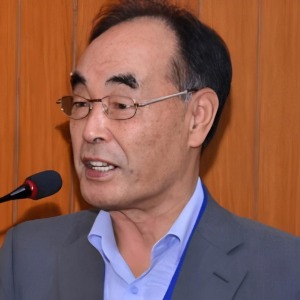
Dai Yeun Jeong
Asia Climate Change Education Center and Jeju National University, Korea, Republic of
Carme Ferre Pavia
Universitat Autonoma de Barcelona, Spain
Heather M Coleman
Ulster University, Ireland
Angela Vande
Vamde consulting, Canada
Bence Hernadi
University of Pannonia, Hungary
Tamaz Patarkalashvili
Technical University, Georgia


Title : Beyond 3R: The 4P proposal for strategic narratives on climate change
Carme Ferre Pavia, Universitat Autonoma de Barcelona, Spain
Title : Climate change and natural disasters: Predicting financial losses, managing volatility, and building financial resilience
Giuseppe Orlando, University of Bari, Italy
Title : Introducing the optimal carbon market: A comparative analysis of current conditions across four regions
Mohammad Imran Azizi, UNEP-Tongji Institute of Environment for Sustainable Development, China
Title : Turning waste into water treatment media: Waste-derived aggregates in nature-based solutions for treating diverse water matrices
Antonio Albuquerque, University of Beira Interior, Portugal
Title : Personalized, community- and population-related health in a changing and sustainable environment through the view of Personalized & Precision Healthcare (PPH): Its impact and role in preventing disease to maximize global health
Sergey Suchkov, N.D. Zelinskii Institute for Organic Chemistry of the Russian Academy of Sciences, Russian Federation
Title : Who bears the cost of a clean transition? Battery circularity and gender justice in India’s electric mobility shift
Sanoj, Jawaharlal Nehru University, Delhi, India