

Coastal erosion
Coastal erosion is the gradual loss of coastal land due to the natural action of waves, tides, currents, and wind. This process reshapes shorelines over time, wearing away beaches, cliffs, and dunes. While erosion is a natural and ongoing phenomenon, it has been significantly intensified by human activities such as construction near shorelines, sand mining, and the removal of vegetation that stabilizes the coast. Climate change has further accelerated coastal erosion through rising sea levels and stronger, more frequent storms that increase wave impact and flooding. As a result, many coastal areas around the world are facing serious environmental and economic challenges.
The consequences of coastal erosion can be severe, including the loss of habitats, property damage, and the displacement of communities. In response, governments and local authorities are implementing both hard and soft engineering solutions to manage erosion. Hard solutions like sea walls and groynes provide immediate protection but can disrupt natural sediment flow. Soft approaches, such as beach nourishment and planting coastal vegetation, aim to work with natural processes to slow erosion. In some cases, managed retreat—relocating infrastructure away from vulnerable areas—is considered the most sustainable option. Combating coastal erosion requires long-term planning, environmental awareness, and cooperation between scientists, policymakers, and communities.
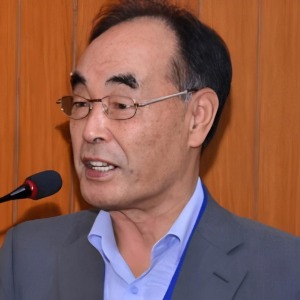
Dai Yeun Jeong
Asia Climate Change Education Center and Jeju National University, Korea, Republic of
Carme Ferre Pavia
Universitat Autonoma de Barcelona, Spain
Heather M Coleman
Ulster University, Ireland
Angela Vande
Vamde consulting, Canada
Bence Hernadi
University of Pannonia, Hungary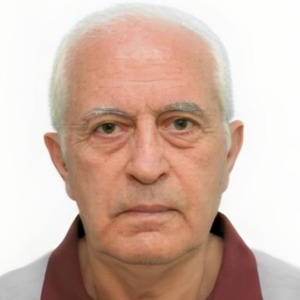
Tamaz Patarkalashvili
Technical University, Georgia


Title : Beyond 3R: The 4P proposal for strategic narratives on climate change
Carme Ferre Pavia, Universitat Autonoma de Barcelona, Spain
Title : Climate change and natural disasters: Predicting financial losses, managing volatility, and building financial resilience
Giuseppe Orlando, University of Bari, Italy
Title : Introducing the optimal carbon market: A comparative analysis of current conditions across four regions
Mohammad Imran Azizi, UNEP-Tongji Institute of Environment for Sustainable Development, China
Title : Turning waste into water treatment media: Waste-derived aggregates in nature-based solutions for treating diverse water matrices
Antonio Albuquerque, University of Beira Interior, Portugal
Title : Personalized, community- and population-related health in a changing and sustainable environment through the view of Personalized & Precision Healthcare (PPH): Its impact and role in preventing disease to maximize global health
Sergey Suchkov, N.D. Zelinskii Institute for Organic Chemistry of the Russian Academy of Sciences, Russian Federation
Title : Who bears the cost of a clean transition? Battery circularity and gender justice in India’s electric mobility shift
Sanoj, Jawaharlal Nehru University, Delhi, India