

Biofuel production
Biofuel production involves converting organic materials such as crops, agricultural residues, and waste into liquid fuels like ethanol, biodiesel, and biogas. These biofuels serve as renewable alternatives to traditional fossil fuels used in transportation and industry. The production process typically includes fermentation, transesterification, and anaerobic digestion, depending on the feedstock and type of fuel being produced. Biofuels help reduce greenhouse gas emissions because the carbon dioxide released during their combustion is partially offset by the carbon absorbed by plants during their growth. This carbon-neutral aspect makes biofuels a promising component in the transition toward cleaner energy systems.
Beyond environmental benefits, biofuel production can stimulate rural economies by creating demand for agricultural products and generating jobs in farming, processing, and distribution. However, sustainable biofuel production must carefully consider land use, food security, and biodiversity. First-generation biofuels, made from food crops like corn and sugarcane, have faced criticism for competing with food supplies. In response, research is increasingly focused on second- and third-generation biofuels derived from non-food feedstocks such as agricultural waste, algae, and dedicated energy crops. By advancing sustainable biofuel technologies, we can reduce dependency on fossil fuels, cut emissions, and promote a more circular and resilient energy future.
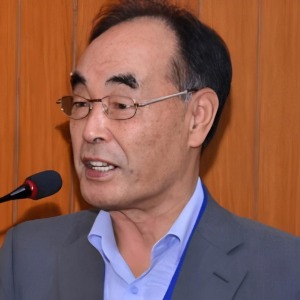
Dai Yeun Jeong
Asia Climate Change Education Center and Jeju National University, Korea, Republic of
Carme Ferre Pavia
Universitat Autonoma de Barcelona, Spain
Heather M Coleman
Ulster University, Ireland
Angela Vande
Vamde consulting, Canada
Bence Hernadi
University of Pannonia, Hungary
Tamaz Patarkalashvili
Technical University, Georgia


Title : Beyond 3R: The 4P proposal for strategic narratives on climate change
Carme Ferre Pavia, Universitat Autonoma de Barcelona, Spain
Title : Climate change and natural disasters: Predicting financial losses, managing volatility, and building financial resilience
Giuseppe Orlando, University of Bari, Italy
Title : Introducing the optimal carbon market: A comparative analysis of current conditions across four regions
Mohammad Imran Azizi, UNEP-Tongji Institute of Environment for Sustainable Development, China
Title : Turning waste into water treatment media: Waste-derived aggregates in nature-based solutions for treating diverse water matrices
Antonio Albuquerque, University of Beira Interior, Portugal
Title : Personalized, community- and population-related health in a changing and sustainable environment through the view of Personalized & Precision Healthcare (PPH): Its impact and role in preventing disease to maximize global health
Sergey Suchkov, N.D. Zelinskii Institute for Organic Chemistry of the Russian Academy of Sciences, Russian Federation
Title : Who bears the cost of a clean transition? Battery circularity and gender justice in India’s electric mobility shift
Sanoj, Jawaharlal Nehru University, Delhi, India