

Agroforestry
Agroforestry is an innovative land management practice that combines agriculture and forestry by integrating trees and shrubs into crop and livestock farming systems. This approach creates sustainable and productive landscapes that offer numerous environmental benefits. By planting trees alongside crops or pasture, agroforestry helps improve soil fertility through nitrogen fixation and organic matter addition, reducing the need for chemical fertilizers. Trees also provide shade and windbreaks, which protect crops and livestock from extreme weather, reduce soil erosion, and help conserve water. The diverse plant species in agroforestry systems promote biodiversity, supporting beneficial insects, birds, and other wildlife, which in turn enhances natural pest control and pollination.
Beyond environmental advantages, agroforestry offers significant economic and social benefits for farmers and rural communities. It diversifies income sources by allowing the production of timber, fruits, nuts, fodder, and medicinal plants alongside traditional crops. This diversification reduces risks associated with crop failure or market fluctuations and improves food security. Additionally, agroforestry systems can enhance carbon sequestration, contributing to climate change mitigation. By adopting agroforestry, farmers can create resilient agricultural landscapes that sustain livelihoods while protecting the environment. Overall, agroforestry represents a harmonious balance between agriculture and nature, promoting sustainable land use and fostering both ecological and economic well-being.
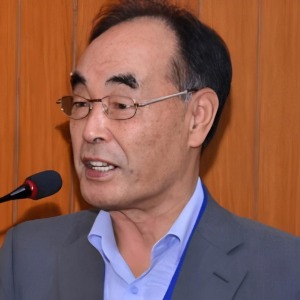
Dai Yeun Jeong
Asia Climate Change Education Center and Jeju National University, Korea, Republic of
Carme Ferre Pavia
Universitat Autonoma de Barcelona, Spain
Heather M Coleman
Ulster University, Ireland
Angela Vande
Vamde consulting, Canada
Bence Hernadi
University of Pannonia, Hungary
Tamaz Patarkalashvili
Technical University, Georgia


Title : Beyond 3R: The 4P proposal for strategic narratives on climate change
Carme Ferre Pavia, Universitat Autonoma de Barcelona, Spain
Title : Climate change and natural disasters: Predicting financial losses, managing volatility, and building financial resilience
Giuseppe Orlando, University of Bari, Italy
Title : Introducing the optimal carbon market: A comparative analysis of current conditions across four regions
Mohammad Imran Azizi, UNEP-Tongji Institute of Environment for Sustainable Development, China
Title : Turning waste into water treatment media: Waste-derived aggregates in nature-based solutions for treating diverse water matrices
Antonio Albuquerque, University of Beira Interior, Portugal
Title : Personalized, community- and population-related health in a changing and sustainable environment through the view of Personalized & Precision Healthcare (PPH): Its impact and role in preventing disease to maximize global health
Sergey Suchkov, N.D. Zelinskii Institute for Organic Chemistry of the Russian Academy of Sciences, Russian Federation
Title : Who bears the cost of a clean transition? Battery circularity and gender justice in India’s electric mobility shift
Sanoj, Jawaharlal Nehru University, Delhi, India